FORMER FREEZER WORKS
AKUNA DRIVE, WILLIAMSTOWN NORTH VIC 3016
-
Add to tour
You must log in to do that.
-
Share
-
Shortlist place
You must log in to do that.
- Download report
Statement of Significance
What is significant?
How is it significant?
Why is it significant?
-
-
FORMER FREEZER WORKS - History
Construction of the Former Freezing Works began in 1882 (The Leader 1886). The works operated from 1883 until 1983 when operations ceased under H.W. Greenham & Sons Pty Ltd (The Leader 1886, O’Leary 2008). When the Australian Frozen Meat Export Co. began operating out of the site in 1883, they were Victoria’s first successful meat freezing works (Vines 1993). The Freezing Works provided employment for many local residents (Argus 1892). The Freezing Works facilities were substantial and consisted of grazing paddocks, killing pens, stone tanks, channelling, a tramway, an engine room, freezing chambers and a railway siding along the Geelong Railway line (The Leader 1886). The facility operated in a production-line process known as the chain, in which each stage of slaughtering and dressing of the animal were carried out as a separate operation (Vines 1993). The early freezing machinery was operated by boilers (The Leader 1886). The machinery shed and the chilling chamber were constructed of carefully overlapped corrugated iron, with double doors and ‘India rubber’ door seals to allow a close seal (The Leader 1886). The main building was approximately 100 feet square, with a wide verandah and earth banked at either end to maintain the cold temperatures inside (The Leader 1886). The Freezing Works were inspected by the Premier of Victoria, James Patterson, in November 1893 (The Williamstown Chronicle 1893). An illustration of the facilities of the Newport Freezing Works was produced by David Syme & Co in March of the same year. The Freezing Works facilities continued to be extended and updated throughout the 20th century. The central part of the main refrigerating works building was depicted as constructed of masonry in the 1912 Melbourne and Metropolitan Board of Works, Williamstown, Plan No.13. The remainder of the buildings in the complex were depicted as weatherboard. In June 1926 a fire at the Freezing Works caused an estimated £5000 damage (Herald 1926, p.2). Aerial imagery from 1945 demonstrates further expansions to the Freezing Works facilities. The Freezing Works were operated by various companies throughout its 100 year history, including The Australian Frozen Meat Export Co. 1882-1886, Melbourne Refrigerating and Agency Company (Messrs Hotson and Whitley) ca. 1886, Messrs. Turnbull, Hotson and Co. ca. 1893, Austral Freezing Works, Newport (John Cooke and Co.) ca. 1906, Sims Cooper and Co ca. 1926, R. J. Gilberton Pty Ltd 1971-1979 and H.W. Greenham & Sons Pty. Ltd 1979-1983 (O’Leary 2008, The Herald 1906, Vines 1993). The Freezing Works facilities were demolished by 1989 (Analed 1997). An environmental audit of the western and central (south of the new industrial buildings) portions of the Former Freezing Works site from 1997 notes significant ground disturbances to areas of the site and other areas which have been built up with fill (Analed 1997). The report also notes asbestos sheeting fragments were identified across most of the site, particularly in the western and south-western portions (Analed 1997). Despite these disturbances it is possible that archaeological evidence of the Former Freezing Works remains, particularly in the form of cesspits.SiteCard data copied on 28/11/2024:The Former Freezing Works, constructed in 1882 and operational until 1983, was Victoria’s first successful meat freezing facility, employing many local residents. The site featured substantial facilities, including grazing paddocks, killing pens, freezing chambers, and a railway siding. The freezing machinery operated via boilers, and buildings were constructed with features like rubber-sealed doors to maintain cold temperatures. Over the 20th century, the facilities were expanded and updated, as evidenced by historical maps and aerial imagery. The site was operated by various companies, including the Australian Frozen Meat Export Co., Sims Cooper and Co., and H.W. Greenham & Sons Pty. Ltd., before its demolition by 1989. An environmental audit in 1997 noted significant ground disturbances, asbestos sheeting, and the potential for archaeological remains such as cesspits. The Former Freezing Works site (H7822-2390) played a key role in Victoria’s meat processing industry, with potential archaeological significance tied to its evolution. Historical records and MMBW plans document features such as slaughterhouses, refrigerating works, reservoirs, and associated structures. Some features, like timber structures near the site boundary, are not fully captured by the current VHI listing but align with the site's historical operations. These remnants, visible on vacant land, highlight phases of use from the late 19th century to 1945. A revised extent of the VHI listing is proposed to better capture the site’s archaeological potential, aligning with historical boundaries depicted in a 1969 title before subdivision.FORMER FREEZER WORKS - Interpretation of Site
Phases of occupation: • Late 19th – late 20th century (1882-1983) – Industrial meat processing. The site went through various phases of development as the facilities were upgraded and extended. The fire in 1926 appears to have caused significant damage and likely required reconstruction works. • 21st Century -Industrial estate/ vacant land. Industrial development to the north eastern portion of the site is believed to have begun in the late 1990s or early 2000s. The remainder of the site appears to have been predominantly vacant since the demolition of the Freezing Works facility in 1989. SiteCard data copied on 28/11/2024: The Former Freezing Works site (H7822-2390) demonstrates its historical use as a prominent industrial meat processing facility from the late 19th to the late 20th century. This period is evident in the archaeological potential of surviving features, such as timber structures, refrigerating and slaughterhouse complexes, reservoirs, and associated outbuildings. These features reflect the evolution of the site’s infrastructure in response to technological advancements, expansions, and reconstructions, including the significant rebuilding efforts necessitated by the fire in 1926. The site’s phased development mirrors the broader historical trajectory of the Victorian meat processing industry, characterized by evolving practices and an enduring role in local employment and industrial growth. The transition to industrial estate and predominantly vacant land in the 21st century has likely had a significant impact on the archaeological remains. Modern industrial developments in the northeastern portion of the site and the extensive ground disturbances identified in previous audits, including the presence of fill and asbestos sheeting, suggest moderate to high levels of disturbance across the site. However, areas of potential archaeological significance, such as features B6 and B8, remain evident within the proposed revised extent. These features, identified through historical mapping and physical remnants, indicate the potential for subsurface archaeological deposits that provide insight into the operational history of the Former Freezing Works. Such remnants offer a valuable opportunity to further explore the development of industrial meat processing practices in Victoria.
Heritage Inventory Description
FORMER FREEZER WORKS - Heritage Inventory Description
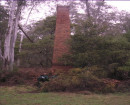
The Former Freezing Works were located on the present day Akuna Drive, the area is currently an industrial estate. The northern side of Akuna drive and most of the southern side has been completely redeveloped. However, the land at 7-9 Akuna Drive remains vacant, as well as land to the south and west of the new industrial buildings. These areas are currently overgrown with vegetation and littered with building debris. SiteCard data copied on 28/11/2024: The Former Freezing Works were located on the present day Akuna Drive, the area is currently an industrial estate. The northern side of Akuna drive and most of the southern side has been completely redeveloped. However, the land at 7-9 Akuna Drive remains vacant, as well as land to the south and west of the new industrial buildings. These areas are currently overgrown with vegetation and littered with building debris. While a physical survey was not conducted for this assessment, information from the Metropolitan Roads Program Alliance (MRPA) was provided following a routine site inspection on 4 October 2024. This inspection characterised the location relevant to the proposed expansion of H7822-2390 (SPI A/LP221219) as grassed, vacant land containing remnant brickwork, foundations, or paving, located north of the VHI extent at time of the routine inspection.
-
-
-
-
-
SWAN HILL WATER TOWER
Victorian Heritage Register H2452 -
RULES OF THE MELBOURNE FOOTBALL CLUB
Victorian Heritage Register H2428 -
MOUNT LITTLE DICK FIRE TOWER
Victorian Heritage Register H2461
-
-